Short answer · Medically reviewed summary · Last updated: 2026-04-06

Autism is considered a highly heritable, complex neurodevelopmental condition that arises from a combination of genetic and environmental factors rather than a single inheritance pattern. As a clinical geneticist, I often explain that while Autism is strongly genetic, it is rarely "hereditary" in the classic sense of a single-gene disorder like cystic fibrosis. Instead, Autism is multifactorial, meaning it involves the interaction of hundreds of different genetic variants—some inherited from parents and others that occur spontaneously. Inheritance and Genetic Architecture There is no single "autism gene." Instead, Autism typically results from a combination of common genetic variations and rare, de novo mutations.

2 people with Autism have shared their first-person experience on this question at DiseaseMaps.

11

Is Autism hereditary?

Is Autism hereditary? The genetic component explained in plain language, reviewed against medical sources, with patient experiences.
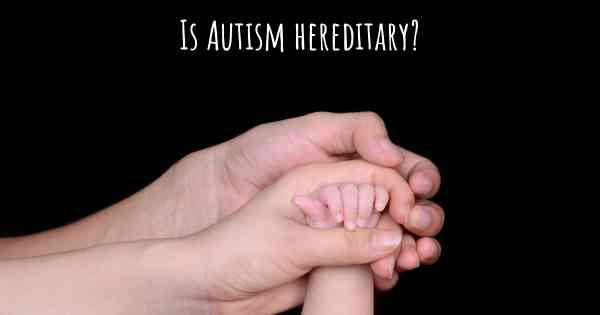
Is Autism hereditary?

Autism is considered a highly heritable, complex neurodevelopmental condition that arises from a combination of genetic and environmental factors rather than a single inheritance pattern.


As a clinical geneticist, I often explain that while Autism is strongly genetic, it is rarely "hereditary" in the classic sense of a single-gene disorder like cystic fibrosis. Instead, Autism is multifactorial, meaning it involves the interaction of hundreds of different genetic variants—some inherited from parents and others that occur spontaneously.


Inheritance and Genetic Architecture


There is no single "autism gene." Instead, Autism typically results from a combination of common genetic variations and rare, de novo mutations. These de novo mutations are spontaneous changes that occur in the egg or sperm cell, meaning they are not present in the parents’ own DNA. Research indicates that these spontaneous mutations are significantly more common in individuals with Autism than in the general population.


Risk and Genetic Testing


The recurrence risk for siblings of a child with Autism is estimated to be approximately 10–20%, which is significantly higher than the general population risk, confirming a strong genetic component. Clinical genetic testing—specifically chromosomal microarray analysis (CMA) and whole-exome sequencing—is now recommended as a first-tier diagnostic tool to identify specific copy number variants or rare gene mutations that may be driving the condition in a specific family.


The Role of Genetic Counseling


Genetic counseling is invaluable for families navigating an Autism diagnosis. A counselor helps interpret complex testing results, assesses the likelihood of recurrence for future pregnancies, and provides emotional support. While there is no standard "carrier test" for Autism due to its polygenic nature, counseling can help families understand the underlying biology of their specific situation. Prenatal diagnosis is generally not pursued for Autism, as the genetic architecture is too complex to provide predictive results before birth.


Medical Disclaimer: This information is for educational purposes and does not substitute for professional medical advice, diagnosis, or treatment. Always seek the advice of your physician or a qualified genetics professional with any questions regarding a medical condition.


References


  • NIH Genetic and Rare Diseases Information Center (GARD)

  • Orphanet: The portal for rare diseases and orphan drugs

  • OMIM (Online Mendelian Inheritance in Man)

  • Autism Science Foundation

Author: DiseaseMaps Editorial Team
Reviewed against authoritative medical sources (NIH GARD, Orphanet, OMIM)
Last updated: 2026-04-06
Medical disclaimer: This information does not substitute professional medical advice. Always consult your doctor before making health decisions.
Source: DiseaseMaps.org
3 answers
Sometimes there is a family with 6 kids and all 6 have autism

Posted Sep 29, 2019 by Amy 13500
A lot of my family has Autistic traits, but, honestly, who cares if it's genetic or not? What causes it isn't important because it's a natural variation in the human species.

Posted Dec 8, 2019 by alexanderyanj 2520
Is Autism hereditary?

Autism life expectancy

What is the life expectancy of someone with Autism?

4 answers
Celebrities with Autism

Celebrities with Autism

3 answers
Is Autism contagious?

Is Autism contagious?

3 answers
ICD9 and ICD10 codes of Autism

ICD10 code of Autism and ICD9 code

3 answers
Natural treatment of Autism

Is there any natural treatment for Autism?

3 answers
Living with Autism

Living with Autism. How to live with Autism?

4 answers
Autism diet

Autism diet. Is there a diet which improves the quality of life of people w...

4 answers
History of Autism

What is the history of Autism?

3 answers

World map of Autism

Find people with Autism through the map. Connect with them and share experiences. Join the Autism community.

Stories of Autism

AUTISM STORIES
Autism stories
I was born autistic, but I wasn't diagnosed until I became an adult. With co-morbid ADHD (combined type), this made life a lot harder than it needed to be. Unbeknownst to me and my family, this was most likely the cause of all the bullying I went ...
Autism stories
I was diagnosed with Autism at age 2, since then I had 2 behaviourists and 2 different therapies, way later on I was also diagnosed with dyscalculia and since transferring to Ms. Misty's class I've been doing better, but I'm still really bad at math....

Tell your story and help others

Tell my story

Autism forum

AUTISM FORUM

Ask a question and get answers from other users.

Ask a question

Find your symptoms soulmates

From now on you can add your symptoms in diseasemaps and find your symptoms soulmates. Symptoms soulmates are people with similar symptoms to you.

Symptoms soulmates

Add your symptoms and discover your soulmates map

Soulmates map