Short answer · Medically reviewed summary · Last updated: 2026-05-08
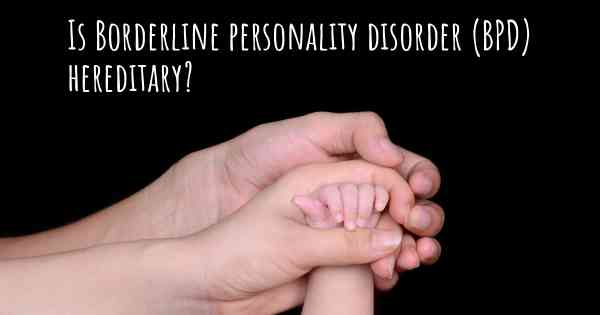
Borderline personality disorder (BPD) is considered a complex, multifactorial condition rather than a simple hereditary disease caused by a single gene mutation. Research indicates that while genetics play a significant role in susceptibility, Borderline personality disorder (BPD) is the result of an intricate interplay between inherited genetic predispositions and environmental factors, such as childhood trauma or chronic stressors. Is Borderline personality disorder (BPD) hereditary? Borderline personality disorder (BPD) is not caused by a single gene, meaning it does not follow simple Mendelian inheritance patterns like autosomal dominant or recessive traits.
1 people with Borderline personality disorder (BPD) have shared their first-person experience on this question at DiseaseMaps.
Borderline personality disorder (BPD) is considered a complex, multifactorial condition rather than a simple hereditary disease caused by a single gene mutation. Research indicates that while genetics play a significant role in susceptibility, Borderline personality disorder (BPD) is the result of an intricate interplay between inherited genetic predispositions and environmental factors, such as childhood trauma or chronic stressors.
Borderline personality disorder (BPD) is not caused by a single gene, meaning it does not follow simple Mendelian inheritance patterns like autosomal dominant or recessive traits. Instead, it is a polygenic condition where multiple genes each contribute a small amount of risk. Twin studies suggest that the heritability of Borderline personality disorder (BPD) is approximately 40% to 60%, indicating that while genetic factors are significant, they are not the sole determinants of the disorder.
Because Borderline personality disorder (BPD) is multifactorial, there is no specific "BPD gene" that can be identified through standard genetic testing. The risk for a child of a parent with Borderline personality disorder (BPD) is higher than that of the general population, but this risk is influenced by both biological inheritance and the family environment. Key factors include:
Currently, there is no clinical genetic testing available to diagnose Borderline personality disorder (BPD) or to predict its development in children. Because the condition is not caused by a single mutation, genetic counseling is typically focused on psychological education and family support rather than prenatal diagnosis or carrier testing. De novo (spontaneous) mutations are not considered a primary driver of the condition.
Medical disclaimer: This content is for informational purposes only and does not constitute medical advice, diagnosis, or treatment; always seek the advice of a qualified healthcare provider with any questions regarding a medical condition.