Short answer · Medically reviewed summary · Last updated: 2026-05-08
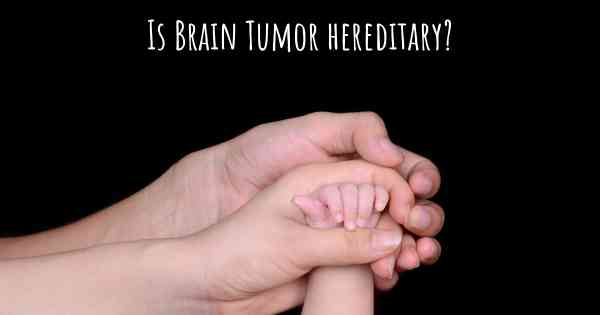
Most cases of a brain tumor are not inherited, as the majority arise from sporadic, non-heritable mutations that occur during a person's lifetime. While a small percentage of brain tumor cases are linked to rare hereditary cancer syndromes, the vast majority are considered de novo events rather than conditions passed down through generations. Is a brain tumor hereditary? In clinical genetics, it is important to distinguish between "genetic" and "hereditary." A brain tumor is almost always genetic in the sense that it involves mutations in the DNA of tumor cells; however, it is rarely hereditary (passed from parent to child).
Most cases of a brain tumor are not inherited, as the majority arise from sporadic, non-heritable mutations that occur during a person's lifetime. While a small percentage of brain tumor cases are linked to rare hereditary cancer syndromes, the vast majority are considered de novo events rather than conditions passed down through generations.
In clinical genetics, it is important to distinguish between "genetic" and "hereditary." A brain tumor is almost always genetic in the sense that it involves mutations in the DNA of tumor cells; however, it is rarely hereditary (passed from parent to child). Only about 5% to 10% of cases are associated with inherited cancer predisposition syndromes, such as Neurofibromatosis type 1 or 2, Tuberous Sclerosis, or Li-Fraumeni syndrome.
For the average patient, a brain tumor is a result of sporadic mutations caused by environmental exposures or random errors during cell division. For the small subset of families with an inherited syndrome, the inheritance pattern is typically autosomal dominant, meaning a child of an affected parent has a 50% chance of inheriting the mutation. In these specific cases, the following factors are often considered:
Genetic counseling is strongly recommended for families with multiple members affected by a brain tumor or those diagnosed with specific rare subtypes. A counselor can help determine if your specific brain tumor diagnosis warrants clinical genetic testing to assess risks for other family members.
Medical disclaimer: This information is for educational purposes only and does not replace professional medical advice, diagnosis, or treatment.