18
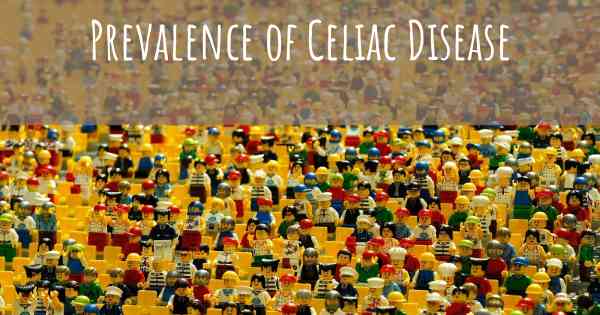
What is the prevalence of Celiac Disease?
Prevalence of Celiac Disease: how many people are affected worldwide, differences by sex and region, with sources.
Celkem velka, v ČR je jen desetina lidi diagnostikovanych
Posted May 27, 2017 by Lucy Baudysova 2440
The prevalence of celiac disease is estimated to be 1% of the overall population according to the National Institute of Health (NIH) in the USA.
Posted May 31, 2017 by FlorenceK 2545
Coeliac disease is slightly more common among women than men. About 1 person in 100 suffers from the condition
Posted Sep 4, 2017 by Emyr 2500
In my country of Ireland they reckon about 10% are celiac. The number is much lower in the UK and drops further the further east into Europe you go. I don't know the rate in the USA but I suspect many existing cases would be in people of Irish descent. It can affect both men and women and all age groups. Some can go undiagnosed through childhood or may not be diagnosed until much later in life.
Posted Sep 11, 2017 by Eamon 2500
Current statistics in America state that 1 in 100 have Celiac Disease.
Posted Sep 12, 2017 by JJinPA 2070
Celiac disease affects 1% of healthy, average Americans. That means at least 3 million people in our country
are living with celiac disease—97% of them are undiagnosed. Celiac disease affects at least 3 million
Americans.
are living with celiac disease—97% of them are undiagnosed. Celiac disease affects at least 3 million
Americans.
Posted Nov 11, 2017 by Stephanie 2690
In europe 1% of population
Posted Jan 28, 2019 by Iveta 4700
It is believed that around 4% of the population have celiac
Posted Jun 21, 2019 by mcbphd1 2500
Estima-se que 1% da população tenha doença celíaca, porém 80% das pessoas não estão diagnosticadas.
A prevalência de diagnóstico é maior entre as mulheres e crianças, mas pode se manifestar em qualquer época da vida.
A prevalência de diagnóstico é maior entre as mulheres e crianças, mas pode se manifestar em qualquer época da vida.
Posted May 28, 2025 by Fernanda de Oliveira 3020
Translated from spanish
Improve translation
1% of the population, although not all are diagnosed. Affects more women.
Posted Sep 4, 2017 by Mónica 1900
Translated from spanish
Improve translation
between 1% and 2% of the population, mostly women
Posted Nov 2, 2017 by danay 2850