19
Is it easy to find a partner and/or maintain relationship when you have CRPS Complex Regional Pain Syndrome?
Relationships and CRPS Complex Regional Pain Syndrome: real patients share how diagnosis affected dating and partnership.
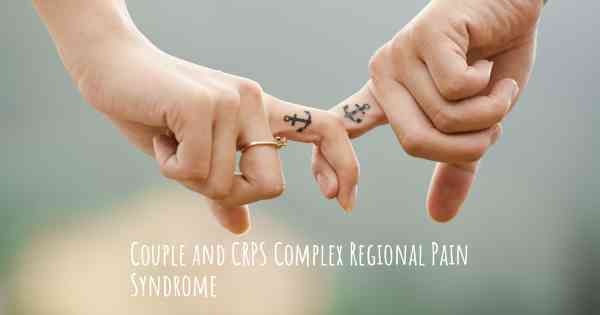
A Partner that is understanding and aware of the condition is the key to a good solid relationship
Posted Sep 6, 2017 by [email protected] 5060
Yes it can be dificult. But that doesn't mean it cant be. You find someone whom understands and cares. Space can be important too so that you can go a scream your head off when required on your own.
Posted Sep 13, 2017 by Andy 3550
Finding a partner can be a challenge in and of itself. Add the debilitating effects of CRPS and finding a life partner can be very hard. Maintaining a loving relationship is also difficult, and that challenge is even greater when you add all the effects of living with CRPS. It is not impossible. When looking for a partner, the best advice is the same with or without CRPS: know who you are and what your values are and then watch for someone who matches and complements your gifts, strengths, values, and purpose. Communication is the key ingredient to a healthy relationship, with or without CRPS. Learning how to be gracious about minor faults and reminding yourself of what attributes attracted you in the first place will help.
Posted Sep 15, 2017 by DrLisa 3750
CRPS is a disability and can be difficult for other people to live with you as the pain is great and you can get very short tempered with it.
Posted Sep 19, 2017 by Alex 2550
Having Crps make relationships alot harder. Being sensitive to touch makes things it hard if your already in a relationship but starting outs even harder if you need to explain in a first date where they can and carnt touch you.
Your really need to find someone very understanding as for a non suffer it's difficult for them to understand what we are going through especially as most of the time we all look great!
Your really need to find someone very understanding as for a non suffer it's difficult for them to understand what we are going through especially as most of the time we all look great!
Posted Nov 11, 2017 by Katie Banks 1015
No. It affects everyone involved! You must have an understanding partner and family to have a good life with this horrible disease
Posted Nov 11, 2017 by Robbie 2000
I can’t imagine it would be easy to find a partner with CRPS, it would have to be someone amazing . Yes maintaining a relationship with CRPS is difficult and often times impossible. It takes strength, understanding and lots of support to maintain a healthy relationship
Posted Nov 11, 2017 by Aj 2000
My advice is to be open and honest about what you are going through. Don’t try to hide the real you. The “right” person will be there or come along when you least expect it to happen to love/support you.
Posted Nov 12, 2017 by Kim 400
This makes it difficult to find and maintain a partner. Patients are often bed ridden or wheel chair bound and in constant pain. Patients sensitivity to noise and wind make it hard to be out and about.
Posted Nov 12, 2017 by Shanna 5000
It can be difficult on a relationship. In the beginning the partner may be helpful but as time passes and your lives are interrupted because of the pain it may becoming draining on them. They may not want to be with someone who complains of pain all the time or is unable to do things with them.
Make sure you explain to any new partner exactly what this disease is and what complications it has caused you. Be up front about it.
Make sure you explain to any new partner exactly what this disease is and what complications it has caused you. Be up front about it.
Posted Nov 12, 2017 by ladyff1481 2050
Relationships are challenging with this disease. Don't go it alone --- see a counselor. It's offered at all reputable pain management clinics. Ask for help.
Posted Nov 13, 2017 by Thea 3150
Anyone can find a partner but finding someone that understands the highs and lows of CRPS is important.
Posted Oct 25, 2018 by Misty 2100
It is not at all easy. The reality is to learn to love yourself as ultimately, it's up to one's self to create inner fulfillment. If you have a partner who cares and stay's by you, it's a bonus.
Posted Nov 1, 2018 by Judy 3000
Yes I believe it would be hard for someone to start a relationship but not impossible. If you are already in one when you get CRPS it is not easy. It takes a lot of work and understanding to make it work. Communication is the key to making it work. Each person will need grieving time and time to come to terms with the diagnosis. Then I think the partner should educate themselves about this condition and accompany the patient to all doctor visits and treatments in order to be of support to that person. Believing the one who has CRPS is the most important and understanding that they will not be able to all things or activities all the time. Will have to modify plans based on how the CRPS warrior is feeling. Just being there helps and showing the other that you care and will be there.
Posted Jan 5, 2019 by Cynthia 4000
Not really.
Married people deal with own issues.
As a single person. Most days Who cares about a partner. Dealing with survival.
And when you talk to anyone when would you share your cbronic pain and life problems.
Not first date material.
If you have hope. You don't give. Your walk is your walk.
Married people deal with own issues.
As a single person. Most days Who cares about a partner. Dealing with survival.
And when you talk to anyone when would you share your cbronic pain and life problems.
Not first date material.
If you have hope. You don't give. Your walk is your walk.
Posted Jan 16, 2021 by Patricia 3050
Honesty and openness is paramount. I may LOOK beautiful, attractive, healthy. Im outgoing, fearless and open about everything. I also VERY VERY SINGLE for 7 yrs. As soon as it looks like I have a connection with someone, I tell them about CRPS. They're gonna find out one way or another. I gauge their responses to the info. I ask questions and answer theirs. No surprises. I know that it takes a special person and a special connection to date me, spend time, be by my side, be strong for himself as he deals with seeing my pain. Not everyone is cut out for this life w me and I cant hold that against them. I need someone I know will react compassionately to my pain if I have to STOP in the middle of sex and wont continue to cause pain and wait for me to get thru it and come right back to him. I need open communication about how, when and where it's ok to touch me. Isnt that what any lover wants anyway? We just have to much more careful about it. I need someone with a steel spine to deal and soft heart to love me thru and inspite of my pain. It isnt easy and there have been train wrecks along the way. But I've also made many dear friends who may not be cut out to be my life partner but share awareness about CRPS and if I find myself in need, many are still there to this day. I know my perfect match is out there, just as for everyone else. I'd rather be single than with the wrong partner so I patiently wait and co tinue to be open to find him.
Posted Jan 23, 2021 by Stacie 100
While it is quite easy to find a partner while having crps, it can be difficult to maintain the relationship. Our health becomes stressful to our partners. It can be financially taxing to be with someone who has Complex Regional Pain Syndrome. Prepare your partner for the bad pain days. Teach them how to help you. It's scary to see someone you love in so much pain, but they want to help, so teach them what's most effective for reducing your pain.
Posted Mar 29, 2021 by Sage0920 2000
I developed CRPS when I was married. Still married after 32 years. Some partners both have CRPS. Has made no difference personally. Have a very understanding husband.
Posted Nov 3, 2022 by Heather 5020
It often depends on the gender of the person and how they are affected. Men often have relationships lasting through the diagnosis regardless, but most women have a significantly higher divorce rate than their health counterparts of preexisting relationships prior to CRPS triggering. However, for women, relationships that start after, often are more successful.
Posted May 6, 2026 by Flora Langel "Naanad" DeKock 1745