Short answer · Medically reviewed summary · Last updated: 2026-04-07
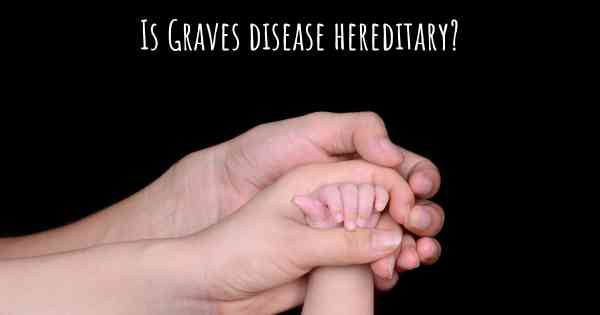
Graves disease is considered a multifactorial autoimmune condition, meaning it is not caused by a single gene mutation but rather by a complex interaction between genetic predisposition and environmental triggers. While it has a strong hereditary component, it does not follow a simple Mendelian inheritance pattern, and having a family history of Graves disease does not guarantee that a family member will develop the condition. Is Graves disease considered a hereditary condition? Graves disease is not strictly "hereditary" in the way that conditions like cystic fibrosis are, where a single gene change dictates the outcome.
1 people with Graves disease have shared their first-person experience on this question at DiseaseMaps.
Graves disease is considered a multifactorial autoimmune condition, meaning it is not caused by a single gene mutation but rather by a complex interaction between genetic predisposition and environmental triggers. While it has a strong hereditary component, it does not follow a simple Mendelian inheritance pattern, and having a family history of Graves disease does not guarantee that a family member will develop the condition.
Graves disease is not strictly "hereditary" in the way that conditions like cystic fibrosis are, where a single gene change dictates the outcome. Instead, it is a multifactorial disorder. This means that individuals inherit a susceptibility to the disease through multiple genes—such as those involved in immune regulation like HLA-DR3, CTLA-4, and PTPN22—which increase the risk of the body’s immune system attacking the thyroid gland. Because it is multifactorial, environmental factors such as stress, smoking, or viral infections often act as the final "trigger" that causes the disease to manifest in genetically predisposed individuals.
Because Graves disease involves multiple genetic and environmental variables, it is impossible to provide a precise percentage of risk for children. However, clinical data indicates that the risk of developing an autoimmune thyroid condition is significantly higher in first-degree relatives of patients with Graves disease compared to the general population. While the exact recurrence risk is not quantified by a simple percentage, it is well-documented that autoimmune thyroid disease tends to cluster in families. De novo (spontaneous) mutations are not the primary cause of Graves disease; rather, the underlying genetic susceptibility is typically inherited, though it may skip generations or remain dormant.
Currently, there is no routine genetic test available for the general public to predict the development of Graves disease. Because the disease is polygenic (involving many genes), a single diagnostic test cannot accurately determine who will or will not develop the condition. Clinical diagnosis remains focused on blood tests (measuring TSH, free T4, and T3 levels) and the detection of thyroid-stimulating immunoglobulins (TSI). Genetic testing is generally reserved for research settings to better understand the autoimmune mechanisms behind Graves disease rather than for clinical diagnostic purposes.
Genetic counseling is highly valuable for families with a history of Graves disease, particularly for those planning pregnancies. A genetic counselor can help families understand the following:
Medical Disclaimer: This content is for informational purposes only and does not constitute professional medical advice, diagnosis, or treatment; always seek the advice of your physician or other qualified health provider with any questions regarding a medical condition.