Short answer · Medically reviewed summary · Last updated: 2026-04-06
HIV/AIDS is an infectious disease caused by the human immunodeficiency virus and is not a hereditary or genetic condition. As a clinical geneticist, it is vital to distinguish between a genetic condition—which arises from changes in an individual's DNA—and an infectious disease like HIV AIDS. Because HIV AIDS is caused by a viral pathogen that targets the immune system, it is never passed down through the germline (sperm or egg cells) and therefore does not follow any patterns of inheritance, such as autosomal dominant or recessive, that we typically see in genetic disorders. Transmission vs.
4 people with HIV AIDS have shared their first-person experience on this question at DiseaseMaps.
HIV/AIDS is an infectious disease caused by the human immunodeficiency virus and is not a hereditary or genetic condition.
As a clinical geneticist, it is vital to distinguish between a genetic condition—which arises from changes in an individual's DNA—and an infectious disease like HIV AIDS. Because HIV AIDS is caused by a viral pathogen that targets the immune system, it is never passed down through the germline (sperm or egg cells) and therefore does not follow any patterns of inheritance, such as autosomal dominant or recessive, that we typically see in genetic disorders.
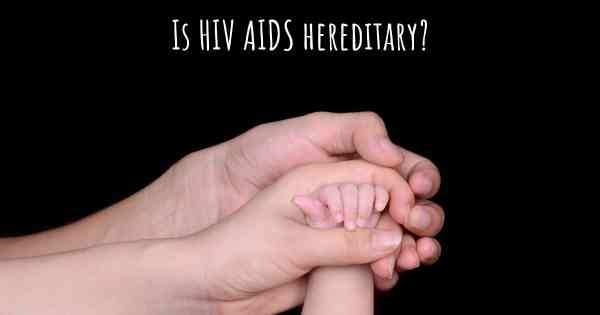
While HIV AIDS is not hereditary, it can be transmitted from a pregnant person to their baby during pregnancy, birth, or breastfeeding; this is known as vertical transmission. However, this is distinct from genetic inheritance. Because the virus is not encoded in the child's genome, there is no "risk percentage" for a child to inherit the disease in the way they might inherit a genetic mutation. With modern antiretroviral therapy (ART), the risk of vertical transmission can be reduced to less than 1% if the parent is virally suppressed.
Genetic testing is not used to diagnose HIV AIDS, nor is it relevant for family planning in the context of the virus itself. Genetic counseling for those living with HIV AIDS who are planning a pregnancy focuses on optimizing viral load suppression and discussing clinical interventions, such as pre-exposure prophylaxis (PrEP) for partners and neonatal care protocols to prevent transmission. Unlike genetic diseases, there are no de novo mutations to consider, and carrier testing is not applicable because the condition is acquired, not inherited.
Disclaimer: This information is for educational purposes only and does not constitute medical advice, diagnosis, or treatment. Always seek the advice of your physician or other qualified health provider with any questions regarding a medical condition.