Short answer · Medically reviewed summary · Last updated: 2026-05-08

Mantle cell lymphoma is not contagious and cannot be spread through physical contact, bodily fluids, or airborne transmission. It is a type of B-cell non-Hodgkin lymphoma that originates from genetic changes within an individual's own cells, meaning there is zero risk to family members, caregivers, or friends who interact with a patient. What causes mantle cell lymphoma? Mantle cell lymphoma is a malignancy caused by an acquired genetic mutation, specifically a translocation between chromosomes 11 and 14.

15

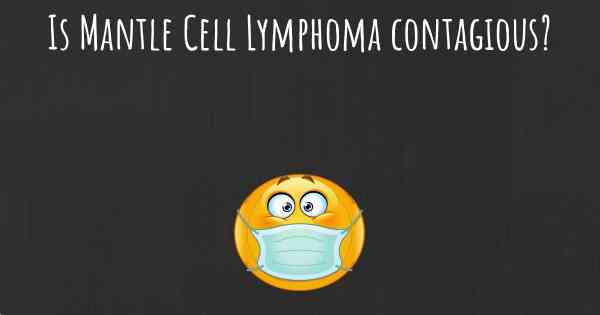
Is Mantle Cell Lymphoma contagious?

Is Mantle Cell Lymphoma contagious? Clear, medically reviewed answer on transmission, with sources.

Is Mantle Cell Lymphoma contagious?

Mantle cell lymphoma is not contagious and cannot be spread through physical contact, bodily fluids, or airborne transmission. It is a type of B-cell non-Hodgkin lymphoma that originates from genetic changes within an individual's own cells, meaning there is zero risk to family members, caregivers, or friends who interact with a patient.


What causes mantle cell lymphoma?


Mantle cell lymphoma is a malignancy caused by an acquired genetic mutation, specifically a translocation between chromosomes 11 and 14. This genetic error leads to the overexpression of the cyclin D1 protein, which causes lymphocytes to multiply uncontrollably. Because these changes occur within the patient's own DNA after birth, mantle cell lymphoma is not an infectious disease and cannot be caught from or passed to others.


Why is there confusion about contagion?


Some people may mistakenly believe mantle cell lymphoma is contagious because it involves the immune system, which is often associated with viruses or infections. Additionally, because patients may appear frail or undergo treatments that weaken their immune systems, some may incorrectly assume the patient is "carrying" an illness that could be transmitted. It is vital to understand that mantle cell lymphoma is a cancer of the lymphatic system, not an infectious disease.


Is there any risk to people living with a patient?


There is absolutely no risk of transmission when living with, touching, or caring for a person with mantle cell lymphoma. You can safely share meals, bathrooms, and physical affection. The following points clarify the nature of the condition:


  • No Infectious Agent: No virus, bacteria, or fungus causes the development of mantle cell lymphoma.

  • Non-Hereditary: While genetic mutations drive the disease, these are somatic (acquired) mutations, not germline mutations passed from parent to child.

  • Environmental Factors: There is no evidence that exposure to a patient with mantle cell lymphoma poses an environmental health risk to others.


Next steps


  • Consult with a hematologist-oncologist to understand the specific subtype and treatment plan.

  • Connect with the mantle cell lymphoma community at DiseaseMaps.org to share experiences with others.

  • Educate friends and family members by sharing reliable information to dispel myths regarding contagion.


Medical disclaimer: This information is for educational purposes only and does not constitute professional medical advice, diagnosis, or treatment.


References


  • National Cancer Institute (NCI) - Mantle Cell Lymphoma Treatment Overview

  • NIH Genetic and Rare Diseases Information Center (GARD)

  • Leukemia & Lymphoma Society (LLS) - Understanding Mantle Cell Lymphoma

  • Orphanet - Rare Disease Database

Author: DiseaseMaps Editorial Team
Reviewed against authoritative medical sources (NIH GARD, Orphanet, OMIM)
Last updated: 2026-05-08
Sources cited: National Cancer Institute (NCI) - Mantle Cell Lymphoma Treatment Overview · NIH Genetic and Rare Diseases Information Center (GARD) · Leukemia & Lymphoma Society (LLS) - Understanding Mantle Cell Lymphoma · Orphanet - Rare Disease Database · WHO
Medical disclaimer: This information does not substitute professional medical advice. Always consult your doctor before making health decisions.
Source: DiseaseMaps.org
1 answer

Is Mantle Cell Lymphoma contagious?

Mantle Cell Lymphoma life expectancy

What is the life expectancy of someone with Mantle Cell Lymphoma?

3 answers
Celebrities with Mantle Cell Lymphoma

Celebrities with Mantle Cell Lymphoma

1 answer
Is Mantle Cell Lymphoma hereditary?

Is Mantle Cell Lymphoma hereditary?

1 answer
ICD9 and ICD10 codes of Mantle Cell Lymphoma

ICD10 code of Mantle Cell Lymphoma and ICD9 code

1 answer
Natural treatment of Mantle Cell Lymphoma

Is there any natural treatment for Mantle Cell Lymphoma?

1 answer
Living with Mantle Cell Lymphoma

Living with Mantle Cell Lymphoma. How to live with Mantle Cell Lymphoma?

1 answer
Mantle Cell Lymphoma diet

Mantle Cell Lymphoma diet. Is there a diet which improves the quality of li...

1 answer
History of Mantle Cell Lymphoma

What is the history of Mantle Cell Lymphoma?

1 answer

World map of Mantle Cell Lymphoma

Find people with Mantle Cell Lymphoma through the map. Connect with them and share experiences. Join the Mantle Cell Lymphoma community.

Stories of Mantle Cell Lymphoma

MANTLE CELL LYMPHOMA STORIES

Tell your story and help others

Tell my story

Mantle Cell Lymphoma forum

MANTLE CELL LYMPHOMA FORUM

Ask a question and get answers from other users.

Ask a question

Find your symptoms soulmates

From now on you can add your symptoms in diseasemaps and find your symptoms soulmates. Symptoms soulmates are people with similar symptoms to you.

Symptoms soulmates

Add your symptoms and discover your soulmates map

Soulmates map