Short answer · Medically reviewed summary · Last updated: 2026-05-08

The most effective treatments for Obsessive Compulsive Disorder (OCD) typically involve a combination of specialized psychotherapy, specifically Exposure and Response Prevention (ERP), and pharmacological intervention with Selective Serotonin Reuptake Inhibitors (SSRIs). Because Obsessive Compulsive Disorder (OCD) manifests uniquely in every individual, treatment plans must be personalized by a multidisciplinary team to address the specific nature of a patient's obsessions and compulsions. What are the first-line treatments for Obsessive Compulsive Disorder (OCD)? Clinical guidelines for Obsessive Compulsive Disorder (OCD) prioritize Cognitive Behavioral Therapy (CBT), specifically the ERP protocol, which involves gradually exposing patients to triggers while resisting the urge to perform rituals.

2

What are the best treatments for Obsessive Compulsive Disorder (OCD)?

Treatments for Obsessive Compulsive Disorder (OCD): what real patients say works for them, alongside a medically reviewed overview citing sources like NIH GARD and Orphanet.
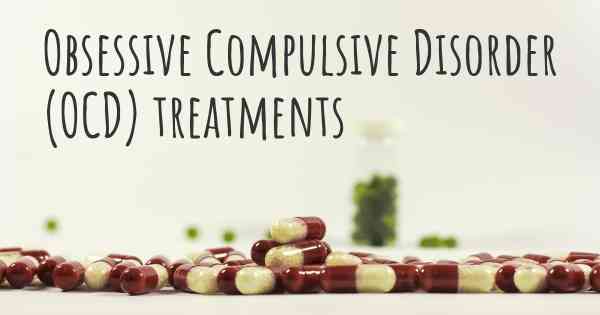
Obsessive Compulsive Disorder (OCD) treatments

The most effective treatments for Obsessive Compulsive Disorder (OCD) typically involve a combination of specialized psychotherapy, specifically Exposure and Response Prevention (ERP), and pharmacological intervention with Selective Serotonin Reuptake Inhibitors (SSRIs). Because Obsessive Compulsive Disorder (OCD) manifests uniquely in every individual, treatment plans must be personalized by a multidisciplinary team to address the specific nature of a patient's obsessions and compulsions.


What are the first-line treatments for Obsessive Compulsive Disorder (OCD)?


Clinical guidelines for Obsessive Compulsive Disorder (OCD) prioritize Cognitive Behavioral Therapy (CBT), specifically the ERP protocol, which involves gradually exposing patients to triggers while resisting the urge to perform rituals. When medication is required, SSRIs are the first-line pharmaceutical choice. It is important to note that higher doses of SSRIs are often required for Obsessive Compulsive Disorder (OCD) compared to those typically used for depression.


Which medications are commonly used?


Physicians often prescribe the following FDA-approved medications for Obsessive Compulsive Disorder (OCD):


  • Fluoxetine (Prozac)

  • Fluvoxamine (Luvox)

  • Sertraline (Zoloft)

  • Paroxetine (Paxil)

  • Clomipramine (Anafranil) – a tricyclic antidepressant often used if SSRIs are ineffective.


What are the non-pharmacological and emerging treatments?


For treatment-resistant cases of Obsessive Compulsive Disorder (OCD), clinicians may explore repetitive Transcranial Magnetic Stimulation (rTMS) or deep brain stimulation. Additionally, intensive outpatient programs provide structured, daily support. As Obsessive Compulsive Disorder (OCD) is a chronic condition, effectiveness varies greatly; many patients find that a combination of therapy and medication provides the best outcome, while others may require adjustments over time to find the right balance.


Who should be on the care team?


Managing Obsessive Compulsive Disorder (OCD) requires a coordinated effort. Your care team should ideally include a psychiatrist for medication management, a psychologist specializing in ERP, and a primary care physician. With 100 members currently sharing their experiences on DiseaseMaps.org, connecting with our community can provide invaluable peer support during your treatment journey.


Next steps


  • Consult a board-certified psychiatrist to discuss a personalized medication and therapy plan.

  • Look for a therapist specifically trained in Exposure and Response Prevention (ERP).

  • Connect with the 100 Obsessive Compulsive Disorder (OCD) community members at DiseaseMaps.org for shared experiences.

  • Keep a symptom diary to track how your treatments influence your daily functioning.


Medical disclaimer: This information is for educational purposes only and does not constitute medical advice; please consult with a qualified healthcare professional regarding all treatment decisions and medication dosages.


References


  • National Institute of Mental Health (NIMH) - OCD Overview

  • NIH Genetic and Rare Diseases Information Center (GARD)

  • International OCD Foundation (IOCDF)

  • PubMed: Clinical Practice Guidelines for the Treatment of OCD

Author: DiseaseMaps Editorial Team
Reviewed against authoritative medical sources (NIH GARD, Orphanet, OMIM)
Last updated: 2026-05-08
Sources cited: National Institute of Mental Health (NIMH) - OCD Overview · NIH Genetic and Rare Diseases Information Center (GARD) · International OCD Foundation (IOCDF) · PubMed: Clinical Practice Guidelines for the Treatment of OCD · WHO
Medical disclaimer: This information does not substitute professional medical advice. Always consult your doctor before making health decisions.
Source: DiseaseMaps.org
1 answer

Obsessive Compulsive Disorder (OCD) treatments

Obsessive Compulsive Disorder (OCD) life expectancy

What is the life expectancy of someone with Obsessive Compulsive Disorder (...

2 answers
Celebrities with Obsessive Compulsive Disorder (OCD)

Celebrities with Obsessive Compulsive Disorder (OCD)

2 answers
Is Obsessive Compulsive Disorder (OCD) hereditary?

Is Obsessive Compulsive Disorder (OCD) hereditary?

1 answer
Is Obsessive Compulsive Disorder (OCD) contagious?

Is Obsessive Compulsive Disorder (OCD) contagious?

1 answer
ICD9 and ICD10 codes of Obsessive Compulsive Disorder (OCD)

ICD10 code of Obsessive Compulsive Disorder (OCD) and ICD9 code

1 answer
Natural treatment of Obsessive Compulsive Disorder (OCD)

Is there any natural treatment for Obsessive Compulsive Disorder (OCD)?

1 answer
Living with Obsessive Compulsive Disorder (OCD)

Living with Obsessive Compulsive Disorder (OCD). How to live with Obsessive...

1 answer
Obsessive Compulsive Disorder (OCD) diet

Obsessive Compulsive Disorder (OCD) diet. Is there a diet which improves th...

1 answer

World map of Obsessive Compulsive Disorder (OCD)

Find people with Obsessive Compulsive Disorder (OCD) through the map. Connect with them and share experiences. Join the Obsessive Compulsive Disorder (OCD) community.

Stories of Obsessive Compulsive Disorder (OCD)

OBSESSIVE COMPULSIVE DISORDER (OCD) STORIES

Tell your story and help others

Tell my story

Obsessive Compulsive Disorder (OCD) forum

OBSESSIVE COMPULSIVE DISORDER (OCD) FORUM

Ask a question and get answers from other users.

Ask a question

Find your symptoms soulmates

From now on you can add your symptoms in diseasemaps and find your symptoms soulmates. Symptoms soulmates are people with similar symptoms to you.

Symptoms soulmates

Add your symptoms and discover your soulmates map

Soulmates map