Short answer · Medically reviewed summary · Last updated: 2026-05-08

Scoliosis, particularly Adolescent Idiopathic Scoliosis (AIS), is considered a multifactorial condition, meaning it likely results from a complex interaction between genetic predisposition and environmental factors rather than a single inherited gene mutation. While there is a clear familial tendency, Scoliosis does not follow a simple Mendelian inheritance pattern, making it difficult to predict outcomes with a single percentage risk. Is Scoliosis hereditary? While Scoliosis has a strong genetic component, it is not strictly "hereditary" in the way conditions like cystic fibrosis are.

11

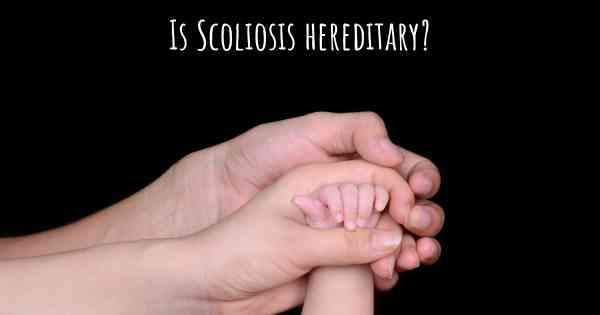
Is Scoliosis hereditary?

Is Scoliosis hereditary? The genetic component explained in plain language, reviewed against medical sources, with patient experiences.

Is Scoliosis hereditary?

Scoliosis, particularly Adolescent Idiopathic Scoliosis (AIS), is considered a multifactorial condition, meaning it likely results from a complex interaction between genetic predisposition and environmental factors rather than a single inherited gene mutation. While there is a clear familial tendency, Scoliosis does not follow a simple Mendelian inheritance pattern, making it difficult to predict outcomes with a single percentage risk.


Is Scoliosis hereditary?


While Scoliosis has a strong genetic component, it is not strictly "hereditary" in the way conditions like cystic fibrosis are. Instead, it is polygenic, involving multiple genes that influence bone growth and spinal development. Studies indicate that approximately 30% of patients with AIS have a family history of the condition. Because it is multifactorial, the risk to children of an affected parent is elevated compared to the general population, but it is not a guaranteed outcome.


What is the role of genetic testing in Scoliosis?


Routine genetic testing is not currently standard for typical idiopathic Scoliosis. However, genetic screening may be recommended in specific scenarios:


  • When Scoliosis presents as part of a syndromic condition (e.g., Marfan syndrome or Ehlers-Danlos syndrome).

  • When the curvature is early-onset (before age 10) or rapidly progressive.

  • When there are other systemic symptoms or physical abnormalities present.


Are de novo mutations common in Scoliosis?


In cases of idiopathic Scoliosis, de novo (spontaneous) mutations are not the primary cause. Most cases are thought to be inherited as a complex trait. However, in rare, syndromic forms of Scoliosis, de novo mutations can occur, leading to the condition in a child without a family history.


How can genetic counseling assist families?


Genetic counseling is highly beneficial for families concerned about the recurrence risk of Scoliosis. A counselor can help map your family history to determine if the curvature is likely idiopathic or secondary to an underlying genetic syndrome. Currently, there is no standardized prenatal testing or carrier screening for common Scoliosis, as the genetic architecture remains highly complex and largely unidentified.


Next steps


  • Consult with a pediatric orthopedist to assess the severity and progression of the spinal curvature.

  • Connect with the 127 members of the DiseaseMaps.org community to share experiences and coping strategies.

  • Request a referral to a clinical geneticist if your family history includes multiple members with spinal deformities or connective tissue disorders.


Medical disclaimer: This information is for educational purposes only and does not replace professional medical advice, diagnosis, or treatment.


References


  • NIH Genetic and Rare Diseases Information Center (GARD): Scoliosis

  • Orphanet: Adolescent Idiopathic Scoliosis

  • OMIM (Online Mendelian Inheritance in Man): Scoliosis, Idiopathic

  • Scoliosis Research Society (SRS): Patient Education Resources

Author: DiseaseMaps Editorial Team
Reviewed against authoritative medical sources (NIH GARD, Orphanet, OMIM)
Last updated: 2026-05-08
Medical disclaimer: This information does not substitute professional medical advice. Always consult your doctor before making health decisions.
Source: DiseaseMaps.org
1 answer

Is Scoliosis hereditary?

Scoliosis life expectancy

What is the life expectancy of someone with Scoliosis?

3 answers
Celebrities with Scoliosis

Celebrities with Scoliosis

1 answer
Is Scoliosis contagious?

Is Scoliosis contagious?

1 answer
ICD9 and ICD10 codes of Scoliosis

ICD10 code of Scoliosis and ICD9 code

1 answer
Natural treatment of Scoliosis

Is there any natural treatment for Scoliosis?

1 answer
Living with Scoliosis

Living with Scoliosis. How to live with Scoliosis?

3 answers
Scoliosis diet

Scoliosis diet. Is there a diet which improves the quality of life of peopl...

3 answers
History of Scoliosis

What is the history of Scoliosis?

1 answer

World map of Scoliosis

Find people with Scoliosis through the map. Connect with them and share experiences. Join the Scoliosis community.

Stories of Scoliosis

SCOLIOSIS STORIES
Scoliosis stories
I was diagnosed with scoliosis at the age of fourteen during a routine check up at the doctors.  I went in to the surgery with a cough that I couldn’t shift and left with an appointment to see a specialist spinal surgeon.  That one escalated quic...

Tell your story and help others

Tell my story

Scoliosis forum

SCOLIOSIS FORUM

Ask a question and get answers from other users.

Ask a question

Find your symptoms soulmates

From now on you can add your symptoms in diseasemaps and find your symptoms soulmates. Symptoms soulmates are people with similar symptoms to you.

Symptoms soulmates

Add your symptoms and discover your soulmates map

Soulmates map