Short answer · Medically reviewed summary · Last updated: 2026-04-07

Navigating romantic relationships while living with Adult-onset Still's Disease (AOSD) requires open communication, patience, and a shift in how intimacy is defined. While the unpredictable nature of systemic inflammation and fatigue can introduce challenges, many individuals with Adult-onset Still's Disease maintain deep, fulfilling partnerships by prioritizing emotional connection and adaptive intimacy. How does Adult-onset Still's Disease affect intimacy and relationships? Adult-onset Still's Disease is a systemic inflammatory condition, meaning its impact extends far beyond joint pain.

3 people with Adult-onset Stills Disease have shared their first-person experience on this question at DiseaseMaps.

19

Is it easy to find a partner and/or maintain relationship when you have Adult-onset Stills Disease?

Relationships and Adult-onset Stills Disease: real patients share how diagnosis affected dating and partnership.
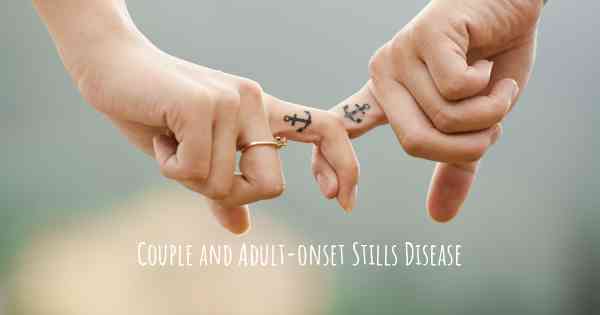
Couple and Adult-onset Stills Disease

Navigating romantic relationships while living with Adult-onset Still's Disease (AOSD) requires open communication, patience, and a shift in how intimacy is defined. While the unpredictable nature of systemic inflammation and fatigue can introduce challenges, many individuals with Adult-onset Still's Disease maintain deep, fulfilling partnerships by prioritizing emotional connection and adaptive intimacy.


How does Adult-onset Still's Disease affect intimacy and relationships?


Adult-onset Still's Disease is a systemic inflammatory condition, meaning its impact extends far beyond joint pain. The combination of high spiking fevers, profound fatigue, and the physical toll of medications like steroids or biologics can significantly impact energy levels available for dating or maintaining intimacy. A "salmon-colored" rash, which is a hallmark of Adult-onset Still's Disease, may also affect self-esteem or body image. It is important to recognize that intimacy is not solely physical; it encompasses emotional closeness, shared experiences, and mutual support, all of which remain possible despite the fluctuations of this condition.


What are effective strategies for communicating about my condition?


Communication is the cornerstone of any relationship involving a chronic illness. When discussing Adult-onset Still's Disease with a partner, focus on "needs" rather than "limitations." Use clear, direct language to explain that your condition is episodic and that your capacity for activity may change from day to day. Consider these strategies:


  • Be proactive: Share information early to establish a baseline of understanding.

  • Use the "Spoon Theory": Explain your daily energy budget to help your partner visualize your limitations.

  • Discuss medication side effects: Be transparent if medications affect your mood, libido, or physical appearance.

  • Plan for "low-energy" dates: Suggest activities that accommodate joint pain or fatigue, such as watching a movie or quiet conversation.


How can couples manage the impact of Adult-onset Still's Disease on sexual health?


Chronic illness often necessitates a more intentional approach to physical intimacy. The systemic inflammation associated with Adult-onset Still's Disease can cause pain, stiffness, and extreme exhaustion, which may lower libido or make traditional sexual activity uncomfortable. It is vital to talk to your rheumatologist about how your specific treatment plan—whether it involves DMARDS, biologics, or steroids—might influence your hormonal health or physical comfort. Experimenting with different positions, using supportive pillows to protect joints, and prioritizing non-penetrative intimacy can help maintain a physical bond without exacerbating disease symptoms.


Is Adult-onset Still's Disease hereditary and how does it affect family planning?


Currently, Adult-onset Still's Disease is not considered a classic hereditary condition. While there may be a genetic predisposition involving certain HLA markers, it is not passed down in a predictable, Mendelian fashion. If you are considering starting a family, it is essential to consult with a rheumatologist and a high-risk obstetrician. Some medications used to manage Adult-onset Still's Disease, such as certain DMARDS, are contraindicated during pregnancy and require careful planning and medication adjustments well in advance.


When should we consider couples counseling?


Living with a rare disease can create a "caregiver-patient" dynamic that sometimes erodes the "partner-partner" connection. Seeking professional counseling is not a sign of failure; it is a tool for resilience. A therapist specializing in chronic illness can help mediate conversations about resentment, fear of the future, and the adjustment to a "new normal."


Next steps


  • Consult your rheumatologist regarding how your current treatment regimen impacts your energy and sexual health.

  • Join the 689 members on DiseaseMaps.org to share experiences with others managing Adult-onset Still's Disease.

  • Schedule a "check-in" meeting with your partner once a week to discuss emotional needs and logistical support.

  • Seek a therapist through organizations like the American Association for Marriage and Family Therapy (AAMFT) who has experience with chronic illness.


Medical disclaimer: This information is for educational purposes only and does not replace professional medical advice, diagnosis, or treatment; always consult with your physician regarding your specific health condition.


References


  • NIH Genetic and Rare Diseases Information Center (GARD) - Adult-onset Still's Disease overview.

  • Orphanet: The portal for rare diseases and orphan drugs.

  • Still's Disease Foundation: Resources for patients and families.

  • PubMed/NCBI: Clinical literature on systemic inflammatory disease and quality of life.

Author: DiseaseMaps Editorial Team
Reviewed against authoritative medical sources (NIH GARD, Orphanet, OMIM)
Last updated: 2026-04-07
Medical disclaimer: This information does not substitute professional medical advice. Always consult your doctor before making health decisions.
Source: DiseaseMaps.org
4 answers
This is a tough one, I'm not sure what to say, I'm happily married and my husband is extremely supportive and protective of me but I realise not everyone will have the same luck as I've had. That's not to say we've not had our tough times, most especially right after I had my first prolonged stint in hospital. You have to work at this relationship, the same way you would have to if you were healthy.

Posted Feb 25, 2019 by Terry 2550
It's difficult to find someone who is supportive through the process of diagnosis and treatment, but it's not impossible. They have to be willing to be a care taker at any point.

Posted Sep 29, 2019 by Jenifer E 4550
Translated from spanish Improve translation
This is a very challenging, since no one else that you know what you feel, and as is the disease, that is why it is important to share everything with your partner, tell your fears, pain and others.If there is love and support of truth it is possible to continue with your relationship.

Posted Oct 18, 2017 by Paula Andrea 2750
Couple and Adult-onset Stills Disease

Adult-onset Stills Disease life expectancy

What is the life expectancy of someone with Adult-onset Stills Disease?

6 answers
Celebrities with Adult-onset Stills Disease

Celebrities with Adult-onset Stills Disease

3 answers
Is Adult-onset Stills Disease hereditary?

Is Adult-onset Stills Disease hereditary?

6 answers
Is Adult-onset Stills Disease contagious?

Is Adult-onset Stills Disease contagious?

6 answers
ICD9 and ICD10 codes of Adult-onset Stills Disease

ICD10 code of Adult-onset Stills Disease and ICD9 code

3 answers
Natural treatment of Adult-onset Stills Disease

Is there any natural treatment for Adult-onset Stills Disease?

4 answers
Living with Adult-onset Stills Disease

Living with Adult-onset Stills Disease. How to live with Adult-onset Stills...

3 answers
Adult-onset Stills Disease diet

Adult-onset Stills Disease diet. Is there a diet which improves the quality...

6 answers

World map of Adult-onset Stills Disease

Find people with Adult-onset Stills Disease through the map. Connect with them and share experiences. Join the Adult-onset Stills Disease community.

Stories of Adult-onset Stills Disease

ADULT-ONSET STILLS DISEASE STORIES
Adult-onset Stills Disease stories
Diagnosed with systemic-onset JRA in 1990, now known as systemic-onset juvenile idiopathic arthritis (SJIA). After a period of remission for a number of years as an adult I presented to ER with a serious flare and they wouldn't listen to me AT ALL ab...
Adult-onset Stills Disease stories
I began feeling a pain in my ankle at 23. I  had a c-section the year before and in that same year, I was mildly electrocuted twice. I thought I'd mention this, but am told that has nothing to do with the diagnoses. I was on steroids for many years ...
Adult-onset Stills Disease stories
My ankle swelled like I'd been bitten by a spider when I was 7yrs old. Spiking fevers, rash & other swollen joints followed. Many hospitals, tests & Drs later Dx JRA. Adult doses of steroids & many other Rxs continued until I went into remission in m...
Adult-onset Stills Disease stories
Diagnosticada de enfermedad de Still a los 20 años.  Tratamiento con MTX. 
Adult-onset Stills Disease stories
Started in May of 2009, while at a meeting for work I had a fever and overall sick feeling when I got to my hotel room.delt with it slept until the next day and all was fine. Same thing happened the next day in the afternoon and evening. This went o...

Tell your story and help others

Tell my story

Adult-onset Stills Disease forum

ADULT-ONSET STILLS DISEASE FORUM

Ask a question and get answers from other users.

Ask a question

Find your symptoms soulmates

From now on you can add your symptoms in diseasemaps and find your symptoms soulmates. Symptoms soulmates are people with similar symptoms to you.

Symptoms soulmates

Add your symptoms and discover your soulmates map

Soulmates map