4
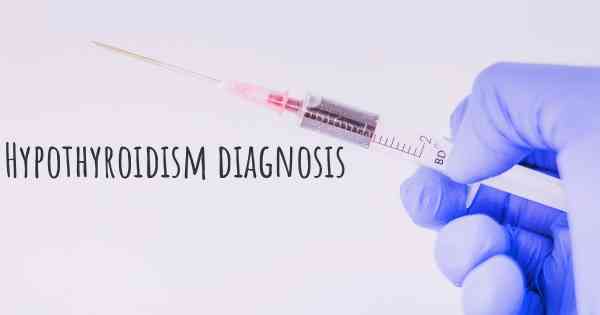
How is Hypothyroidism diagnosed?
How Hypothyroidism is diagnosed: tests, specialists and the diagnostic journey, told by patients and reviewed against medical sources.
symptoms
t3
t4
reverse t3
tsh
antibodies tpo tgab
t3
t4
reverse t3
tsh
antibodies tpo tgab
Posted Mar 30, 2017 by Jade 1020
Blood work and medication
Posted Apr 27, 2017 by Cammy 200
First, it can be diagnosed with physical tests like the symptoms. Usually you have to visit an endocrinologist who prescribe you the following test: TSH, T3 and T4.
Posted May 2, 2017 by Karla 1000
mostly via blood tests
Posted Dec 30, 2019 by Debbie 4050
Translated from spanish
Improve translation
With laboratory tests, nuclear l3 l4 free lsth
Posted Jul 23, 2017 by Mary 1650
Translated from spanish
Improve translation
You must make the visit to the endocrinologo , the same requested tests full blood, tsh , t3, t4 , and other more
In this way, is diagnosed if our thyroid hormone levels are correct and if not then it should be a hypo or hyperthyroidism or some other like hashimoto or Graves
In this way, is diagnosed if our thyroid hormone levels are correct and if not then it should be a hypo or hyperthyroidism or some other like hashimoto or Graves
Posted Sep 14, 2017 by Lisseth Carolina 2100
Translated from spanish
Improve translation
By means of profiles thyroid
Posted Oct 3, 2017 by Itabel 600