6
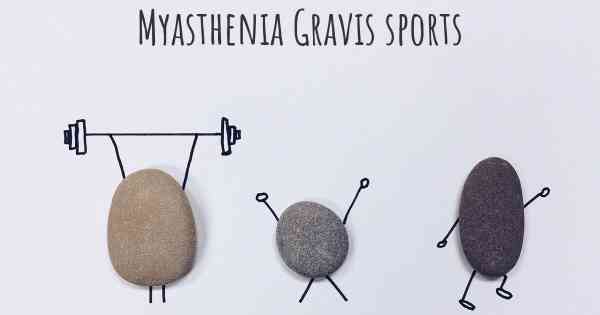
Is it advisable to do exercise when affected by Myasthenia Gravis? Which activities would you suggest and how intense should they be?
Exercise with Myasthenia Gravis: which activities patients recommend or avoid, and what the evidence says.
During a crisis, no.
Exercises that don't tire the muscles, walks, yoga , Pilates.
Exercises that don't tire the muscles, walks, yoga , Pilates.
Posted Mar 12, 2017 by Ara Eliana 1145
It is advised that you exercise. You can walk, run and do most exercises. Just know your body. When you are tired, get some rest. Know your limits..
Posted May 24, 2017 by Don 300
One needs to be cautious when approaching exercise. Some may do well while others can be put into severe symptoms
Posted May 24, 2017 by Sherri 720
If you have the extra energy that's fine but so many of us need what energy we have just to do our day to day functions.
Posted May 24, 2017 by Gary 1500
Translated from spanish
Improve translation
The sport, you must evaluate the patient. Definitely, sports wear, since it is not advisable for you to do it, unless the sick person the support or to have one for a referral.
The ones that I recommend are yoga and pilates, are the most benign.
The ones that I recommend are yoga and pilates, are the most benign.
Posted Mar 14, 2017 by Alejandra 970
Translated from portuguese
Improve translation
Yes it is the recommended preference for the exercise of functions according to the capacity of each
Posted May 24, 2017 by Meire Stella 1000
Translated from portuguese
Improve translation
There are people with myasthenia who practice some physical exercise plus most have a surgical intervention of removal of the thymus gland. Hence the withdrawal of a remission in the disease
Posted May 24, 2017 by Lilian Silva Santos 1000
Translated from spanish
Improve translation
If it is advisable to be active.
Any that allow the symptoms.
Any that allow the symptoms.
Posted Sep 3, 2017 by Marife Loyola 650
Translated from portuguese
Improve translation
To be in a multidiciplinacao by health is no fact for a determination ,that the own carrier miastenico gotta have the proper consciousness. So in the sport
If it is necessary to explore the limits, leaving the bones more rich in calcium,
And comencando so light and knowing the body little by little.
Frenquencia 40 min lesson hydrotherapy 3 times a week. Ja is top!
If it is necessary to explore the limits, leaving the bones more rich in calcium,
And comencando so light and knowing the body little by little.
Frenquencia 40 min lesson hydrotherapy 3 times a week. Ja is top!
Posted Sep 13, 2017 by Paulo de Tarso c carvalho 1500
Translated from portuguese
Improve translation
Is yes, but, of course, depends on the degree of Myasthenia.
I recommend hiking, weight training
I recommend hiking, weight training
Posted Sep 13, 2017 by Lua 3536
Translated from portuguese
Improve translation
Yes. In accordance with the limitations of each one. Light exercises are recommended.
Posted Sep 13, 2017 by Renata 4550
Translated from portuguese
Improve translation
Yes. Depends on each patient.
Posted Sep 13, 2017 by Monique 1500
Translated from spanish
Improve translation
Esi what we recommended to our medical condition .I walk
Posted Sep 30, 2017 by Marcela 900
Translated from spanish
Improve translation
As long as the patient is feeling well and stable, you can perform the type of sport that your body and energy to endure.
Posted Nov 24, 2017 by Carla Mariana 800