Short answer · Medically reviewed summary · Last updated: 2026-04-07

Congenital Central Hypoventilation Syndrome (CCHS) is not contagious; it is a rare, life-long genetic disorder and cannot be spread through touch, respiratory droplets, or any form of social contact. Because it is caused by an underlying genetic mutation, there is absolutely no risk to family members, caregivers, or peers when living with or interacting with an individual diagnosed with Congenital Central Hypoventilation Syndrome. What is the actual cause of Congenital Central Hypoventilation Syndrome? Congenital Central Hypoventilation Syndrome is a rare disorder of the autonomic nervous system.

15

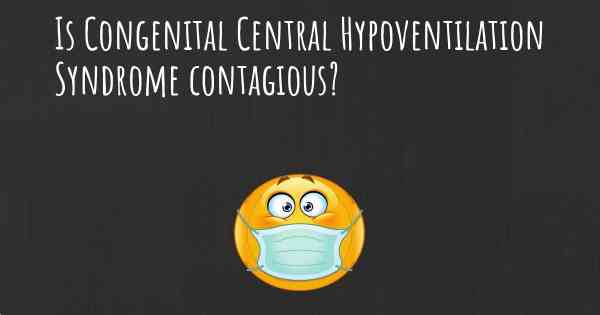
Is Congenital Central Hypoventilation Syndrome contagious?

Is Congenital Central Hypoventilation Syndrome contagious? Clear, medically reviewed answer on transmission, with sources.

Is Congenital Central Hypoventilation Syndrome contagious?

Congenital Central Hypoventilation Syndrome (CCHS) is not contagious; it is a rare, life-long genetic disorder and cannot be spread through touch, respiratory droplets, or any form of social contact. Because it is caused by an underlying genetic mutation, there is absolutely no risk to family members, caregivers, or peers when living with or interacting with an individual diagnosed with Congenital Central Hypoventilation Syndrome.


What is the actual cause of Congenital Central Hypoventilation Syndrome?


Congenital Central Hypoventilation Syndrome is a rare disorder of the autonomic nervous system. The primary cause is a mutation in the PHOX2B gene, which is critical for the development of the neural crest cells that regulate autonomic functions, including the automatic control of breathing. In approximately 90% of cases, this mutation is de novo, meaning it occurred spontaneously in the individual and was not inherited from either parent. Because Congenital Central Hypoventilation Syndrome is fundamentally a genetic condition, it does not involve pathogens, bacteria, or viruses, making it biologically impossible to transmit to others.


Why is there confusion regarding the contagiousness of Congenital Central Hypoventilation Syndrome?


The confusion often stems from the medical equipment frequently used by patients with Congenital Central Hypoventilation Syndrome. Because individuals with this condition may require ventilators, tracheostomies, or supplemental oxygen to assist with breathing, observers may mistakenly associate the equipment with infectious respiratory illnesses like influenza or COVID-19. Furthermore, because Congenital Central Hypoventilation Syndrome affects the respiratory system, the outward appearance of medical support can lead to misplaced social stigma. It is important to emphasize that the respiratory support used by these patients is for mechanical assistance due to a nervous system signal failure, not because of an active infection.


Is it safe to be around someone with Congenital Central Hypoventilation Syndrome?


Yes, it is perfectly safe to live with, touch, and interact with someone who has Congenital Central Hypoventilation Syndrome. There are no environmental triggers or social precautions needed to prevent the spread of the condition, as it simply does not spread. In the DiseaseMaps.org community, where 94 people with Congenital Central Hypoventilation Syndrome have shared their experiences, members often advocate for better public understanding to combat the isolation caused by these misconceptions. Families and friends can provide physical and emotional support without any fear of contagion.


Common myths and facts about the condition


To help clarify the nature of Congenital Central Hypoventilation Syndrome, consider these clinical facts:


  • Genetic Origin: Over 90% of cases are caused by a specific polyalanine repeat expansion mutation in the PHOX2B gene.

  • Non-Infectious: The disorder does not have an incubation period, a carrier state, or a transmission vector.

  • Autonomic Regulation: The condition specifically impairs the body’s ability to sense high levels of carbon dioxide or low levels of oxygen, requiring mechanical intervention during sleep and sometimes while awake.

  • No Environmental Triggers: Exposure to common environmental factors, such as pollen, cold weather, or crowded spaces, does not "trigger" the syndrome in others.


Next steps


  • Consult a pediatric pulmonologist or a neurologist specializing in autonomic disorders for personalized care plans.

  • Join the community at DiseaseMaps.org to connect with other families navigating life with Congenital Central Hypoventilation Syndrome.

  • Educate school staff, employers, and peers about the genetic nature of the condition to reduce social stigma.

  • Review clinical resources from the CCHS Network or the NIH GARD database to stay updated on management strategies.


Medical disclaimer: This information is for educational purposes only and does not constitute medical advice, diagnosis, or treatment; always seek the advice of your physician or other qualified health provider with any questions regarding a medical condition.


References


  • NIH Genetic and Rare Diseases (GARD) Information Center: Congenital Central Hypoventilation Syndrome.

  • Orphanet: Rare Disease Database (ORPHA:415).

  • OMIM (Online Mendelian Inheritance in Man): #209880 (CCHS).

  • The CCHS Network: Patient and Family Resources.

Author: DiseaseMaps Editorial Team
Reviewed against authoritative medical sources (NIH GARD, Orphanet, OMIM)
Last updated: 2026-04-07
Medical disclaimer: This information does not substitute professional medical advice. Always consult your doctor before making health decisions.
Source: DiseaseMaps.org
1 answer

Is Congenital Central Hypoventilation Syndrome contagious?

Congenital Central Hypoventilation Syndrome life expectancy

What is the life expectancy of someone with Congenital Central Hypoventilat...

1 answer
Celebrities with Congenital Central Hypoventilation Syndrome

Celebrities with Congenital Central Hypoventilation Syndrome

1 answer
Is Congenital Central Hypoventilation Syndrome hereditary?

Is Congenital Central Hypoventilation Syndrome hereditary?

1 answer
ICD9 and ICD10 codes of Congenital Central Hypoventilation Syndrome

ICD10 code of Congenital Central Hypoventilation Syndrome and ICD9 code

1 answer
Natural treatment of Congenital Central Hypoventilation Syndrome

Is there any natural treatment for Congenital Central Hypoventilation Syndr...

1 answer
Living with Congenital Central Hypoventilation Syndrome

Living with Congenital Central Hypoventilation Syndrome. How to live with C...

1 answer
Congenital Central Hypoventilation Syndrome diet

Congenital Central Hypoventilation Syndrome diet. Is there a diet which imp...

1 answer
History of Congenital Central Hypoventilation Syndrome

What is the history of Congenital Central Hypoventilation Syndrome?

1 answer

World map of Congenital Central Hypoventilation Syndrome

Find people with Congenital Central Hypoventilation Syndrome through the map. Connect with them and share experiences. Join the Congenital Central Hypoventilation Syndrome community.

Stories of Congenital Central Hypoventilation Syndrome

CONGENITAL CENTRAL HYPOVENTILATION SYNDROME STORIES
Congenital Central Hypoventilation Syndrome stories
i was born on Good Friday in April of 2000, 1 month early with a very low heart not being able to process a large amount of amniotic fluid.  I remained in the NICU for a little over 3 months.  My mutation number is 20/27.  I have multiple diagnosi...
Congenital Central Hypoventilation Syndrome stories
Hello there. In 2012, I got married to a man that was diagnosed at Birth with cchs. He also had a daughter that was diagnosed at Birth with cchs. I am both of their primary care person, outside of doctors of course. As of right now, I have 4 good nur...
Congenital Central Hypoventilation Syndrome stories
Son also has CCHS with associated Hirschsprungs.
Congenital Central Hypoventilation Syndrome stories
I was diagsnosed at 15 days old. I was sent to the hospital in Portland, Oregon. That's where I got my tracheostomy. I had my tracheostomy until I was 16. That's a pretty long time. But luckily I was able to get it out. However, it came with challeng...
Tell your story and help others

Tell my story

Congenital Central Hypoventilation Syndrome forum

CONGENITAL CENTRAL HYPOVENTILATION SYNDROME FORUM

Ask a question and get answers from other users.

Ask a question

Find your symptoms soulmates

From now on you can add your symptoms in diseasemaps and find your symptoms soulmates. Symptoms soulmates are people with similar symptoms to you.

Symptoms soulmates

Add your symptoms and discover your soulmates map

Soulmates map