6
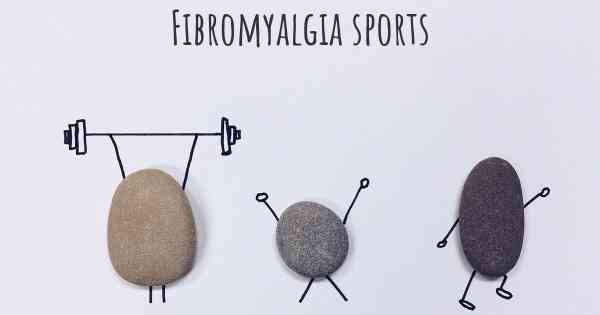
Is it advisable to do exercise when affected by Fibromyalgia? Which activities would you suggest and how intense should they be?
Exercise with Fibromyalgia: which activities patients recommend or avoid, and what the evidence says.
Yoga, meditation. Stretching
Posted Feb 28, 2017 by fathimath 1030
Keeping active is recommended, but it's important to understand your tolerance levels.
Hydrotherapy is excellent due to it taking the pressure off the joints.
Hydrotherapy is excellent due to it taking the pressure off the joints.
Posted Mar 24, 2017 by Kerry 1000
Yes, contrary to popular belief, exercise can help fibro patients a lot. It keeps your muscles/joints limber so they don't get stiff or atrophy from non-use. However you must do LOW impact, be very careful and not overdo it. Go for water exercise, it's the best because it cushions the joints and muscles so you don't hurt yourself more while exercising. It is important to listen to your body well and not ignore any discomfort.
Posted Jun 24, 2017 by Tiffiane 4151
It depends how bad you are and if you are able, but if you are able then a little gentle exercise will help loosen your muscles swimming is good for fibro
Posted Sep 8, 2017 by Sarah 2500
Exercise is always good. Doing things like walking and low impact exercises will ensure your body is kept moving which will help with the pain. Swimming or aquaerobics also help as the water acts as a support for the body.
Listen to your body, if you feel you can push a bit more then do it but also if you feel you have done a bit too much then you should slow down.
Listen to your body, if you feel you can push a bit more then do it but also if you feel you have done a bit too much then you should slow down.
Posted Mar 16, 2018 by Hazel 800
Yes be kind to yourself and build up exercise.
Posted Jul 23, 2021 by Katie 900
If you are diagnosed with fibromyalgia exercise daily, doing exercises that you were able to do while dealing with the pain and exhaustion. A lot of people gain weight with fibromyalgia because they hurt so much that they stop exercising. If you are able to continue exercising do so.
Posted Jul 23, 2023 by Impatientgirl 3000
Translated from spanish
Improve translation
Not depirte propuamente
Yoga mild
Walking
Meditation
Every patient knows where their body can do physical activity without hurting yourself or worsen your condition
Yoga mild
Walking
Meditation
Every patient knows where their body can do physical activity without hurting yourself or worsen your condition
Posted Feb 20, 2017 by Cristina 1051
Translated from spanish
Improve translation
if, what the person stand, walk, yoga, meditation, dance.
Posted Feb 20, 2017 by claudiae.davilach 942
Translated from spanish
Improve translation
Swimming, 3 times x week half hour of walking, 2 times x week, 15 to 20 minutes, depending on each patient, stretching exercises daily 15 minutes
Translated from portuguese
Improve translation
Yes it is recommended as part of the treatment exercises light impact such as walking, stretching, aerobic, dance, and water aerobics in the heated water.
Posted Apr 12, 2017 by Ana Claudia Mariotto 2351
Translated from portuguese
Improve translation
Yes physical exercise is very good but it will depend on the conditions of the patient. A physical therapy can be a good start for the patient to begin to adapt with the movements. Stretching with professional guidance would be a step forward for the patient.
Posted Apr 13, 2017 by Elem 1000
Translated from portuguese
Improve translation
It is not only recommended. It is a requirement, except for cases in which the doctor does not approve.
The physical exercises in fibromyalgia, in addition to promoting a better cardiovascular fitness, acting on the musculoskeletal system, that is, favor the mobility of the muscle groups that are in contraction prolonged, promote the elongation of the tendons, improve balance during gait, strength, and sleep.
The physical exercises in fibromyalgia, in addition to promoting a better cardiovascular fitness, acting on the musculoskeletal system, that is, favor the mobility of the muscle groups that are in contraction prolonged, promote the elongation of the tendons, improve balance during gait, strength, and sleep.
Posted Apr 17, 2017 by ABRAFIBRO - ASSOC BRAS DOS FIBROMIÁLGICOS 1190
Translated from portuguese
Improve translation
Physical exercises that are not repetitive. Hidroginastica, swimming, Yoga, muscle relaxation.
Posted May 9, 2017 by Roberta 1000
Translated from spanish
Improve translation
swim . yoga, dancing, if possible every day better, but each being is unique and unrepeatable, the pains are different in all people
Posted Jul 2, 2017 by isabel suazo 2436
Translated from spanish
Improve translation
That is determined by the patient depending on the severity or degree of pain, almost all sports require a very high degree of difficulty for the patients in my case Tai Chi and dancing at a slow pace helps me of course walking and swimming.
Posted Sep 2, 2017 by Norma 840
Translated from spanish
Improve translation
1.-IF
2.-SWIMMING , IT DEPENDS ON EACH PERSON
3.-WALKING AND SWIMMING
2.-SWIMMING , IT DEPENDS ON EACH PERSON
3.-WALKING AND SWIMMING
Posted Sep 8, 2017 by Aurora 2500
Translated from spanish
Improve translation
Yes, people can and should do sports, swimming, gentle exercises, and stretching.
Posted Sep 12, 2017 by Soledad 2000
Translated from portuguese
Improve translation
We look forward mt limited, ñ we were able to mt, at most, a small walk, because as soon as we are already tired, as to the frequency, this does not may need, we are unpredictable, hj, I can walk, tomorrow, that ñ I can,cuz I ran hj and this took me the rest of the forces.
Posted Sep 16, 2017 by Phoenix 1000
Translated from french
Improve translation
Walking, Qi Gong, Swimming, Yoga, smooth, elliptical... No contact sport... Try to improve the physical strength, but in gentleness... See a kinesiologue to get a program suited to...
Posted Sep 30, 2017 by Marie Hélène Champoux 2550
Translated from french
Improve translation
It is necessary to walk at his pace for about 15 minutes to 30 minutes.
And do exercises swimming
And do exercises swimming
Posted Oct 20, 2017 by Nanie 600